The Integrated Learning Studio — Building critical thinkers through engaging, purposeful learning.
← All grades
2nd
Grade

2nd Grade Curriculum

Four integrated units that weave Reading, Writing, Science, and Social Studies into one theme each. They are designed to build on one another across the school year.

All units are password protected until purchased. The previews, sample lessons, and planning guides are free for everyone. Why?

Eureka! cover
Unit 1 · Six weeks

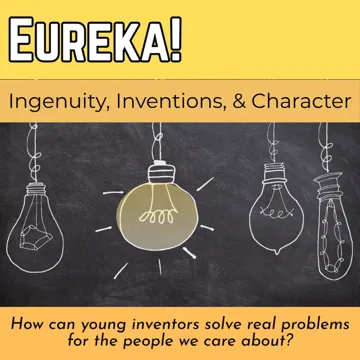
Eureka!

Ingenuity, Inventions, & Character

Driving questionHow can young inventors solve real problems for the people we care about?

Students think like readers, write personal narratives, test materials, and meet inventors from Edwin Binney to Lonnie Johnson. They learn how inventions help a community and how they get made and sold. Then they build their own invention.

WritingPersonal narratives
ScienceProperties of materials and engineering design challenges
Social StudiesInventors, civics, and economics
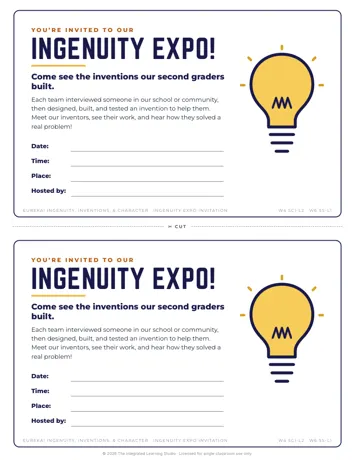
Big finishThe Ingenuity Expo
A peek inside
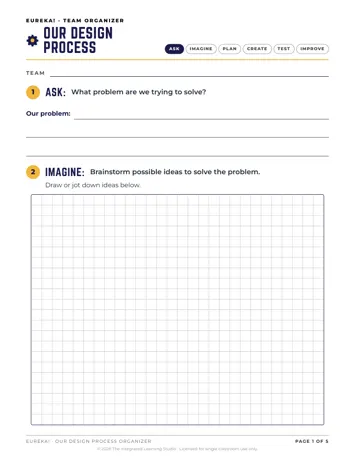
Our Design Process organizer
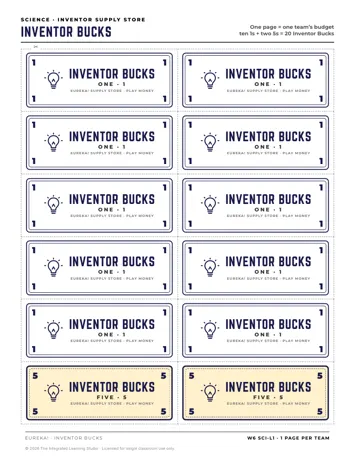
Inventor Bucks
Inventor Bucks
Ingenuity Expo invitation
Sample: Design Challenge: Build a Chair for a Teddy Bear (Science · Week 2), with page 1 of its printables. The planning guide has a typical week, the prep calendar, books, supplies, and standards.
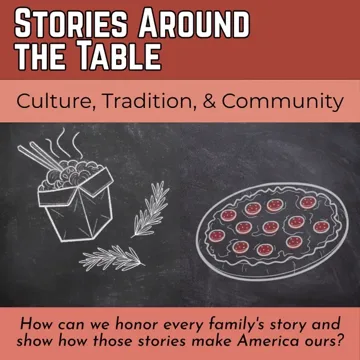
Stories Around the Table cover
Unit 2 · Six weeks

Stories Around the Table

Culture, Tradition, & Community

Driving questionHow can we honor every family’s story and show how those stories make America ours?

Students read books about families from many cultures, write their own family stories, learn about the immigrants whose journeys built America, and grow herbs that families once carried across an ocean.

WritingFamily stories
ScienceA plant investigation: what helps plants grow and thrive
Social StudiesImmigration and the cultures that make up America
Big finishA class cookbook with everyone’s voice
A peek inside
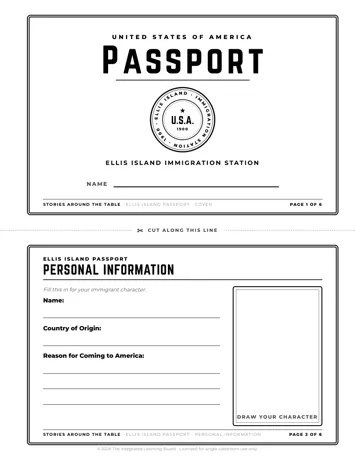
Ellis Island passport
Immigrant Voice Cards
My Family, My Stories cover
Sample: People Brought Plants Too (Science and Social Studies · Week 2), with page 1 of its printables. The planning guide has a typical week, the prep calendar, books, supplies, and standards.
Bring the Zoo to You cover
Unit 3 · Six weeks plus Zoo Week

Bring the Zoo to You

Habitats, Adaptations, & Our World

Driving questionHow can we create a class zoo that helps visitors understand animals and the places they call home?

Students investigate habitats and adaptations, track animals’ real homes on a class world map, research an animal of their own, and build habitat dioramas for a class zoo, complete with a visitor map they design together.

WritingResearch on an animal of their own
ScienceHabitats, adaptations, and food webs
Social StudiesMaps and where animals live
Big finishZoo Week: the class zoo opens to visitors
A peek inside
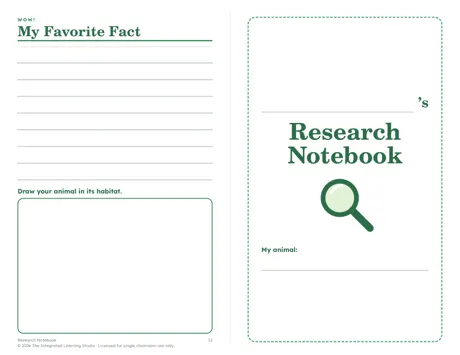
Research Notebook
Research Notebook
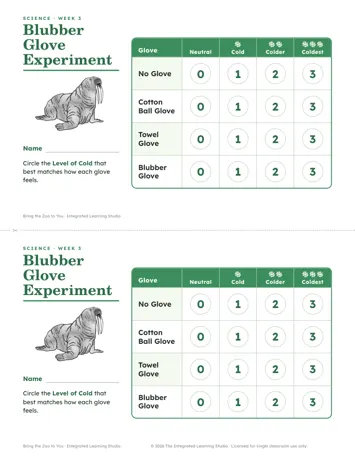
Blubber Glove Experiment
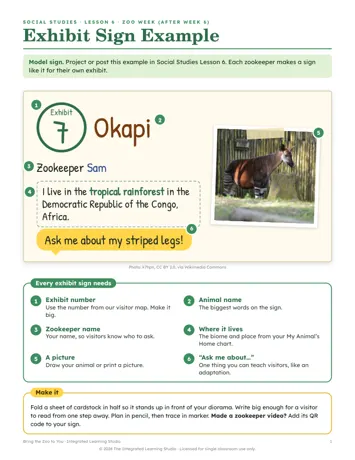
Zoo exhibit sign example
Sample: Blubber Glove Experiment (Science · Week 3), with page 1 of its printables. The planning guide has a typical week, the prep calendar, books, supplies, and standards.
Galactic Guides cover
Unit 4 · Six weeks plus Celebration Week

Galactic Guides

Landforms, Water, & Our Changing Earth

Driving questionHow can we help Zod explore Earth safely and plan the perfect visit for his community?

Zod, a friendly scout from flat, never-changing Planet Plaino, sends the class a new problem every week in an animated transmission. Students build his Earth Survival Plan, design and test a rover, investigate water, landforms, and fast and slow changes, and write a sightseeing guidebook for his community.

WritingA sightseeing guidebook
ScienceWater, landforms, fast and slow changes, and rover design
Social StudiesMaps and staying safe when Earth changes
Big finishThe Guidebook Launch
A peek inside
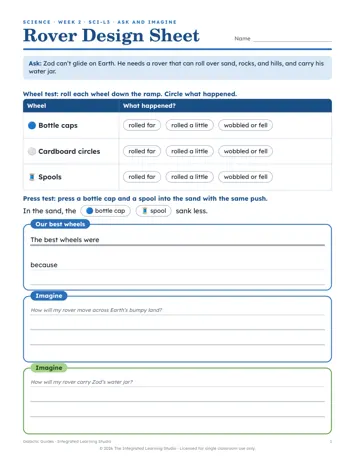
Rover Design Sheet
Rover Design Sheet
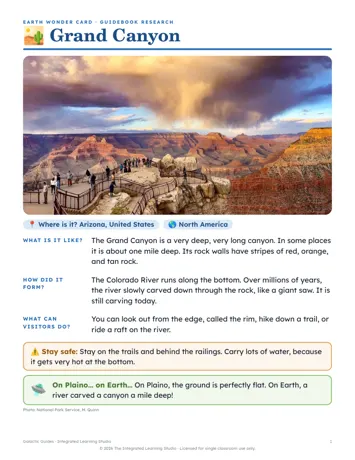
Earth Wonder Cards
Earth Wonder Cards
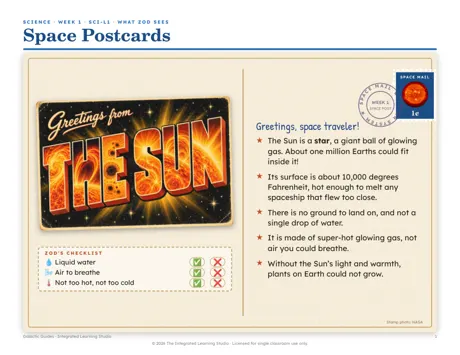
Space Postcards
Space Postcards
Sample: Slow Down Erosion (Science · Week 5), with page 1 of its printables. The planning guide has a typical week, the prep calendar, books, supplies, and standards.

A typical week

Every unit has a planning guide with its full weekly schedule, prep calendar, book list, and supply list: Eureka! · Stories Around the Table · Bring the Zoo to You · Galactic Guides.

Units 1 and 2

Whole-class lessons. Each day has a read-aloud (15–20 minutes) and one Reading or Writing lesson (30–45 minutes), plus three Science or Social Studies lessons a week (30–60 minutes each).

A typical week in Eureka!
MonRead-aloud15–20 Reading lesson30–45 Science45–60
TueRead-aloud15–20 Reading lesson30–45
WedRead-aloud15–20 Reading lesson30–45
ThuRead-aloud15–20 Writing lesson30–45 Science45–60
FriRead-aloud15–20 Writing lesson30–45 Social Studies45–55

Units 3 and 4

A 90-minute Reading & Writing block every day: a short mini lesson, small-group stations, and a read-aloud. Each team meets with you at the Teacher Table twice a week. Two Science lessons (45–55 minutes) and one Social Studies lesson (40–55 minutes) a week.

A typical week in Galactic Guides
MonMini lesson15 Stations60 Share10 Science: Zod’s transmission45–55
TueWarm-up5 Stations60 Read-aloud25
WedMini lesson15 Stations60 Share10 Science45–55
ThuWarm-up5 Stations60 Read-aloud25
FriRead-aloud25 Catch-up and Teacher Table make-up35 If You Have Time30 Social Studies50–55

Phonics, math, intervention, and specials stay in your schedule as they are. Science and Social Studies don’t meet every day, which leaves room for the rest of your week.

Support for every learner

  • Reading at three levels (Units 3–4). Small-group booklets cover the same science at three reading levels, so every student reads about the same ideas at a level that fits.
  • Writing scaffolds (all units). Graphic organizers, sentence starters, and a teacher model for each writing task. In Units 3–4, key organizers come in two versions: one with more support and one that asks for more.
  • Fluency practice (Units 3–4). A partner fluency script every week, plus challenge passages for readers who are ready for more in Unit 4.
  • Hands-on entry points (all units). Science lessons are hands-on investigations, so students who are still building reading skills take part fully.
  • Room to stretch (Units 3–4). “Ready for more?” notes in the lessons and an If You Have Time lesson bank for Fridays.
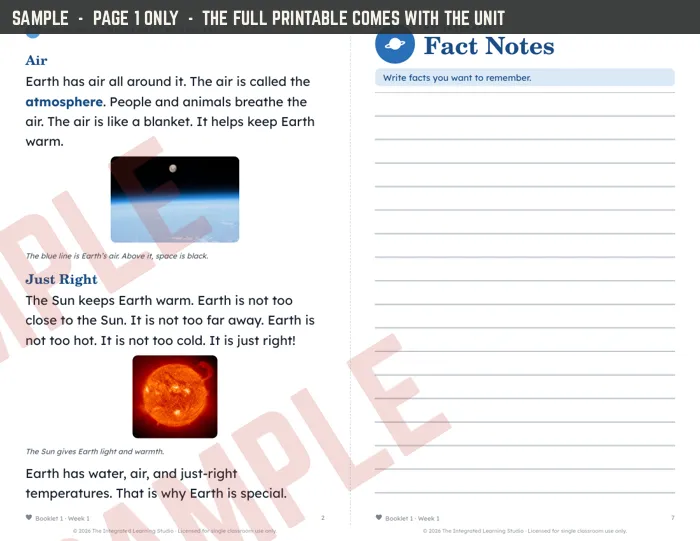
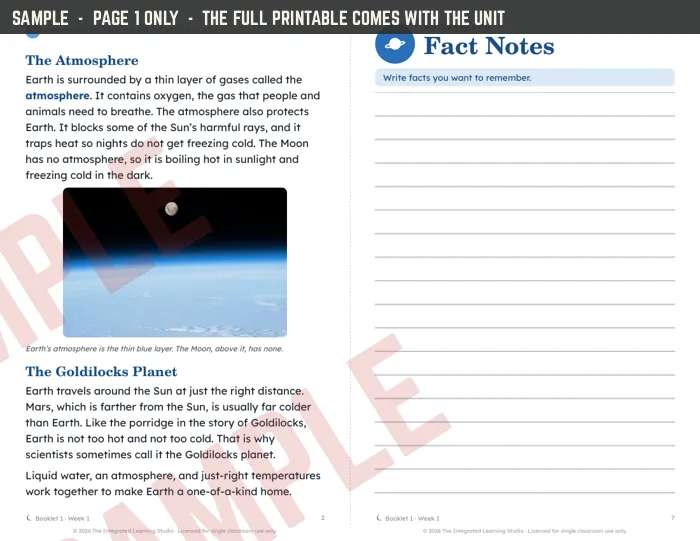
A booklet page written for readers who need more supportThe same booklet page written for stronger readers
The same topic at two reading levels, from Galactic Guides, Booklet 1.

Questions teachers ask

How much time does a unit take each day?

See “A typical week” above. Each unit’s planning guide has its full weekly schedule with minutes: Eureka! · Stories Around the Table · Bring the Zoo to You · Galactic Guides.

How much of the school year do the units cover?

Four units of six weeks, plus Zoo Week and Celebration Week, add up to about 26 weeks of lessons. Teachers find that this fills the year, because an elementary classroom has so much else going on: beginning-of-year routines, assessments, holidays, field trips, and school events.

Do the units replace my phonics or math program?

No. The units teach reading comprehension, writing, grammar, science, and social studies. Keep teaching your school’s phonics and math programs every day alongside them. The minutes in each schedule are for the unit’s own lessons.

Can I teach one unit on its own?

Yes. Each unit includes everything you need to teach it. The units are written to follow one another across the year, and any notes about earlier units are marked as optional.

How are students assessed?

Each unit has a rubric for Reading, Writing, Science, and Social Studies, built around the unit’s standards, so you can document what each student has mastered. Each rubric has a matching student self-assessment, so students reflect on their own work too. Every lesson lists the standards it teaches. See a sample rubric and the full standards list in any unit’s planning guide.

What do I get when I buy a unit?

The complete teacher hub for that unit: every lesson plan, printable, slide deck, video, rubric, and student app, organized week by week. Your license lasts forever, with no subscription. It covers one classroom, and you can print as many copies as your class needs. A school that buys units for several teachers can get one school-wide password.

What technology do I need?

Internet access and a web browser on a computer, Chromebook, or iPad, plus a printer. A projector or screen is helpful for slides and videos. Units 1 and 2 need nothing more. In Units 3 and 4, one small-group station uses tablets or Chromebooks for interactive games. Only one team uses it at a time, so about 5–6 devices with headphones is enough for a whole class. No devices? Each of those units includes a printable kit with the same lessons as card games.

Why are the units password protected?

Each unit’s teacher hub holds the full unit: every lesson, printable, slide deck, video, and student app. These materials are licensed for single classroom use, so each hub opens only for teachers whose classroom or school has purchased that unit.

  • Each unit has its own password. A school that purchases units for several teachers can get one school-wide password that opens all of them.
  • Teachers receive the password with their purchase, and the license lasts forever. Capital letters don’t matter, and your device stays signed in for a year at a time.
  • The previews, sample lessons, and planning guides are open to everyone, so you can see what each unit includes before you buy.